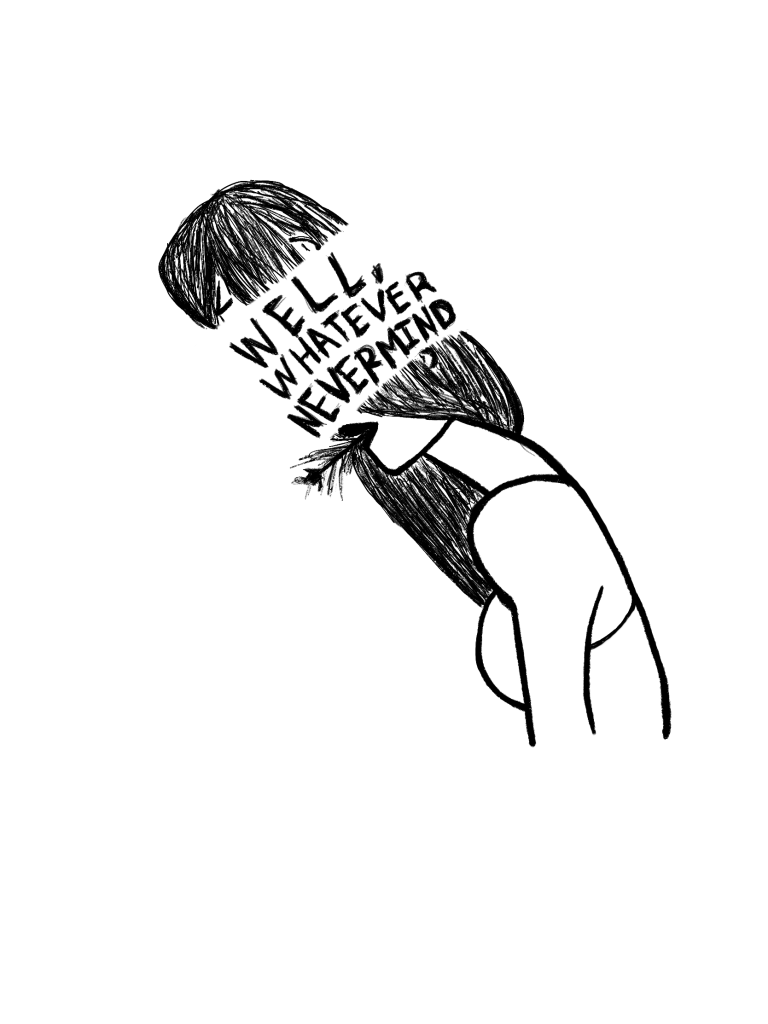
Spoiler Alert!
This post analyzes the film and does go into detail about certain scenes and the movie overall, so if you don’t want to spoil it, please watch first and bookmark this post to read later 🙂
Why Companion Stands Out In A Familiar Genre
It’s no surprise that movies like Companion (2025) Directed by Drew Hancock have been a hot topic in the film world. Movies exploring the repression of women—weather symbolically or directly— have been a staple of storytelling, but Companion takes a fresh take on the theme. The film explored a lot of ideas within this theme such as the imbalance of power dynamics, the need to control a partner, the effects of being complacent and a bystander, and society’s relationship with technology. One aspect of the film that really stood out to me however, was how emotionally unavailable the men were in this film, especially the lead male character, Josh. This is possibly also a reflection of a larger issue in society.
A Relationship Built on Control: Josh and Iris
We meet our main characters, Josh and Iris, within the first scene of the film and they appear to be in a fairly loving and healthy relationship. In fact, through Iris’s eyes we should be seeing Josh as the perfect partner and Iris as being the person who brings insecurities into the relationship. (Ladies, raise your hand if you’ve been there!!) The two are on their way to meet up with Josh’s friends at a fancy home “out in nowhere” but surrounded by gorgeous scenery. Before the couple enters the home, we get our initial glimpse of Iris’s insecurity. She tells Josh, “I’m going to say something stupid and they’re all going to hate me.” A scenario, I think we can all empathize with and have been in before. This is where we get one of our first red flags of Josh, because instead of being sympathetic to her comment he responds somewhat aggressively saying “You’re really doing this now? feet from the door?!” It’s in this instance where I get the perspective that her would be an inconvenience for him and since it’s not a benefit for him to deal with her feelings, he tells her to put on a mask “smile and be happy”. This was our first clue that this character lacks the emotional capacity to hold space for his girlfriend who is clearly in turmoil. As a reflection, I believe that it has become common for men to ignore the emotional labor of being in a relationship. I mean how many times has a man told you to just act happy or not be anxious, instead of helping you work through the emotions?
Iris as an Object: The Cost of Emotional Unavailability
Throughout the next few scenes we get to see more and more of how Josh and Iris interact. Iris states multiple times that she just wants Josh to be happy and is consistently checking in with how he is feeling. He, however, fails to do this at all. Josh is totally okay with Iris holding all the emotional weight in the relationship and in fact, doesn’t even realize she is doing it. As an example we can quickly cut to the scene at the end of the night where they are being intimate. While Josh seems to be in pleasure, Iris seems to be just laying there in complacency. Afterward she tries to converse with on a deeper level, again stating how she wants him to be happy. How does he react to this? By simply saying “Iris, go to sleep.”
By this point, it’s very clear that Iris is controlled by Josh. Although, we know Iris to be Artificial Intelligence, as an audience have become emotionally connected to her because there is an emotional depth to her “robotic-ness”. A quick pause for how amazing Sophie Thatcher is. It is also in this moment, where we can see how truly emotionally shut off Josh is. So much so, that he wants the physicality and appearance of a relationship, but none of the emotional parts that would make the experience whole and fulfilling. While this is very much specific to the movie and to the fact that she’s a “robot” this is also a reflection to so many men in and out of relationships. Now this isn’t to drag every man, because I know this isn’t true for everyone and it’s not great to generalize, however, it’s a pretty common sentiment that women are “more emotional” then men. This is often seen as a weakness but without an emotional depth to our relationships we are operating on empty. We need to deal with our emotions to be able to walk through this world with sympathy, empathy, and an understanding of others.
Kat, Iris, and Women and Replaceable Objects
On the topic of women and men being so different with their emotional capacity, we can look back to an earlier scene between Kat and Iris. Kat is Josh’s longtime friend and is in a situation-ship with the man who owns the property. In this scene we get a clearer understanding of Kat’s disdain towards Iris. She mentions that Iris makes her feel replaceable, because, as we now know, Iris is supposed to be this empty vessel that’s only aim is to please the person who owns her. Kat also tells Iris that she just feels like an object to Sergey. Knowing this, it’s easy to empathize with Kat. If, in this world, men are able to have all the benefits of a relationship without all emotional labor, why would any of us be needed? In this moment we also might find ourselves asking why would she continue to put up with this treatment? Is it because he’s rich or is there an innate need to feel wanted by someone who is emotionally unavailable? In the end, it is uncovered that Kat was fed up with Sergey, but that’s about all I’ll say so I don’t spoil it for anyone that hasn’t seen it yet.
In that same conversation, Iris tells Kat that she wishes she could be like her, but it always feels like something is holding her back. We know that it’s Iris’s programming that stops her from feeling these full emotions. Symbolically, it’s a beautiful thought, because so many of us have been conditioned to hold ourselves back by the effects of society on indivuals, in this case, men. This scene is interesting because it unveils a lot about the dynamics going on between characters and symbolically in society currently. The way Iris and Kat are treated are so similar, while one realizes it and the other doesn’t. They are both looked at as objects rather than people. Objectively, looking at it, Iris is supposed to actually be an “object” and Kat is actually a human yet in this conversation we see that they are leveled and not treated as they should be.
Emotional Avoidance: Josh’s Ultimate Downfall
Up until the end of the film, even as Iris is taking back her control, Josh is still trying to manipulate and control her. He does all he can to exert his power over her and prove that he owns her. There is also a point in which he fights with Kat and says to her that all women do is leave him, alluding to past experiences with the women in his life. This is an interesting aspect that further prefaces his emotional immaturity. Instead of working through his traumas and insecurites with past relationships, he instead ignores the issues and decides to program his own girlfriend, so he can have something to control. Another commonality seen in humanity today.
Josh’s inability to connect on a deeper level with the people around him is ultimately his downfall. The urge in him to control his girlfriend and the situation that is unfolding only makes him weaker and is what leads to his ultimate demise. Iris, in the end, had to kill him to gain her autonomy. She was left scared, but forever changed. Perhaps Iris’s journey mirrors the real-life fight for women reclaiming their autonomy— both individually and collectively.
In Conclusion: A Movie Worth Revisiting
While, this isn’t a perfect movie, it’s one that I did enjoy and gained a lot from. There are some really great sci-fi and horror moments, tied in with a pretty interesting premise and some great twists. It’s a movie that I think is worth watching and revisiting. It’s one that I for sure will have to rewatch at some point.
If you watched this movie, what did you think?
This week’s song recommendation is: Robot by Miley Cyrus. (obviously!)
Thank you, love you.
Rae
 Everything Rae
Leave a comment